7 Signs You Need to Get Your Water Tested in Durham Region
Recurring mineral buildup, stubborn water spots, soap residue, unusual taste or smell, discolouration, returning problems with treated water, and an overdue private-well test are all reasons to investigate. Testing helps identify the concern before you choose a treatment system.
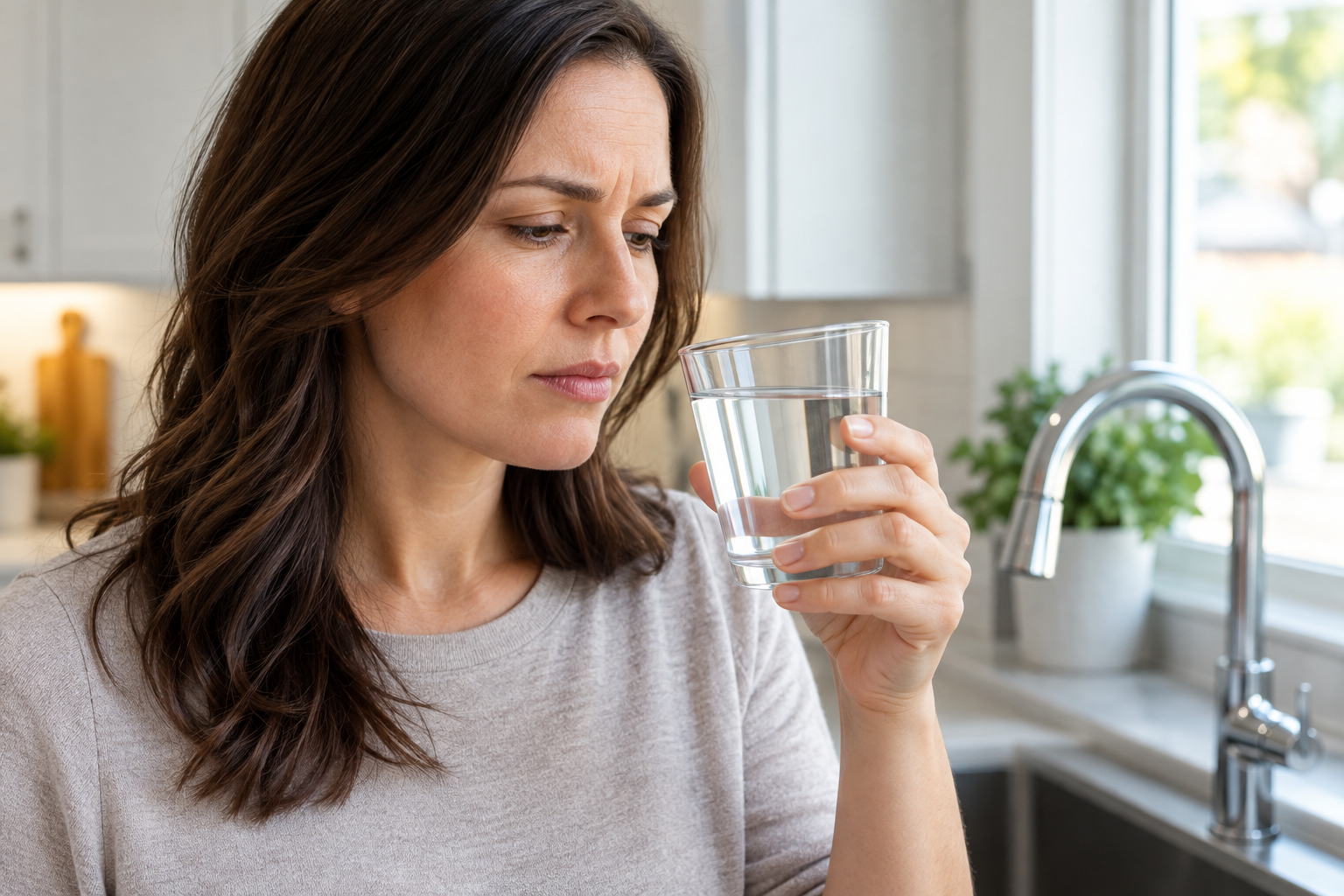
Scrubbing the same white marks off your faucets? Wondering why your tap water tastes different? Your home may be giving you reasons to take a closer look at your water.
For homeowners in Durham Region, the first step is understanding what needs testing. A hardness assessment answers different questions from a laboratory test for bacteria or chemical contaminants.
Here are seven signs it is time to find out more.
1. White, Chalky Buildup Keeps Returning to Your Faucets
Recurring white deposits around taps and showerheads can indicate hard water.
Hardness comes mainly from dissolved calcium and magnesium. These minerals can leave scale behind, particularly when water is heated.
You might notice crust around a faucet spout or deposits inside your kettle. Cleaning removes the visible buildup, but measuring your water’s hardness helps explain why it returns.
What to do: Ask for a hardness assessment before deciding whether a water softener would suit your home.
2. Your Glassware Has Persistent Water Spots
Spots that repeatedly appear after dishes dry may be a reason to check your water’s mineral content.
Before blaming the dishwasher, check its cleaning and rinse-aid instructions. If spots also appear on taps and other surfaces, mention the pattern when arranging your water assessment.A photo of freshly washed glassware can help explain what you are noticing.
What to do: Have the water assessed alongside the appliance settings. The aim is to identify the cause before buying equipment or changing products.
3. Soap Residue Makes Cleaning More Work
Hard water can make soap less effective and contribute to residue on household surfaces.
If shower doors quickly become coated again after cleaning, or soap seems difficult to lather, checking hardness is a practical next step.
These symptoms alone do not establish the condition of your water. They are useful observations to share with the person assessing it.
What to do: Explain where the residue appears and how often it returns. A hardness measurement can help determine whether softening is worth considering.
4. Your Water Has an Unusual Taste or Smell
A new or persistent change in taste or odour deserves investigation.
Notice whether it happens at every tap or only one, and whether it affects cold water, hot water or both. These details help guide the assessment.
Avoid choosing a filter based only on a description such as “metallic” or “rotten egg.” Different concerns require different investigations and treatment.
What to do: For a sudden change in municipal water, contact your water provider. If you use a private well, seek advice about appropriate testing. Do not taste water to check whether it is safe.
5. Your Water Changes Colour or Leaves Unexplained Stains
Discolouration or recurring stains are reasons to identify what is happening in your water supply or plumbing.
Record when the change started, which fixtures are affected and whether it is constant or intermittent. Photos can help document the problem.
A colour change does not identify the substance responsible. It also does not tell you which treatment, if any, is appropriate.
What to do: Ask your water provider or a qualified professional about the next step. Testing may be needed to distinguish a water-quality concern from a plumbing issue.
Health Canada recommends testing private-well water when its colour, taste or smell changes. It also cautions that some contaminants cannot be detected through these senses.
6. Problems Have Returned Despite an Existing Treatment System
Returning water concerns are a reason to check both the water and the equipment already installed.
If you have a softener or filtration system, note its model, maintenance history and when the problem returned. Have any recent service records or test results ready.
The next step may involve servicing equipment, checking its settings or reassessing whether it addresses your current needs.
What to do: Arrange an equipment assessment and ask which measurements are needed to check performance. Oakridge provides water treatment maintenance and assessment services.
7. Your Private Well Is Overdue for Testing
If you rely on a private well, an overdue test is a reason to act—even when the water looks and tastes normal.
Durham Region recommends testing private-well drinking water for bacteria at least three times a year. Its well-maintenance guidance also calls for sampling after potential contamination events such as flooding.
Routine testing matters because visible symptoms are not a dependable warning system.
What to do: Follow Durham Region’s private-well sampling instructions and ask about additional testing appropriate to your property.
Does Having Hard Water Mean Your Water Is Unsafe?
Hardness alone does not mean your water is unsafe to drink.
Health Canada states that calcium and magnesium—the main contributors to hardness—are not health concerns at levels found in drinking water. Hardness is primarily a practical concern involving scale, cleaning and household equipment.
Likewise, clear water is not proof of safety. A water assessment should match the question you need answered: hardness, treatment performance, bacteria or a specific chemical concern.
How Can Oakridge Plumbing Help?
Oakridge Plumbing provides water treatment services in Durham Region, including water assessments, treatment recommendations, softener and filtration installation, and maintenance support.
Start by explaining what you are noticing. Oakridge can discuss your water supply, household needs and existing equipment before recommending a next step.
When booking a free in-home water test, ask what the assessment includes. An in-home treatment assessment does not replace laboratory testing for drinking-water safety. Bacterial or chemical concerns require the appropriate public-health or laboratory testing.
Frequently Asked Questions About Water Testing
How do I know whether I need a water softener?
Recurring scale, water spots and soap residue are reasons to measure hardness. A softener recommendation should consider the result, your household’s water use and existing plumbing.
Will any water filter solve my problem?
No single filter addresses every water concern. Identify what needs treatment first, then choose equipment designed for that purpose.
Should I test my well water if it looks clear?
Yes. Private-well testing should follow a regular schedule because some contaminants do not change the water’s appearance, taste or smell.
Is an in-home water test the same as a laboratory safety test?
No. Ask which parameters the in-home assessment measures. Testing for bacteria or specific chemical contaminants requires an appropriate laboratory or public-health service.
Can Oakridge assess an existing water treatment system?
Yes. Oakridge can assess existing equipment, discuss servicing needs and explain routine maintenance requirements.
Get Answers Before Choosing a Water Treatment System
You do not need to know which system to buy before asking for help. Start with the concern you want to understand.
Request your free in-home water test with Oakridge Plumbing or call 289-404-9063 to discuss your water treatment needs.
Find out what your water needs, understand your options and choose your next step with confidence.
Recent Posts